
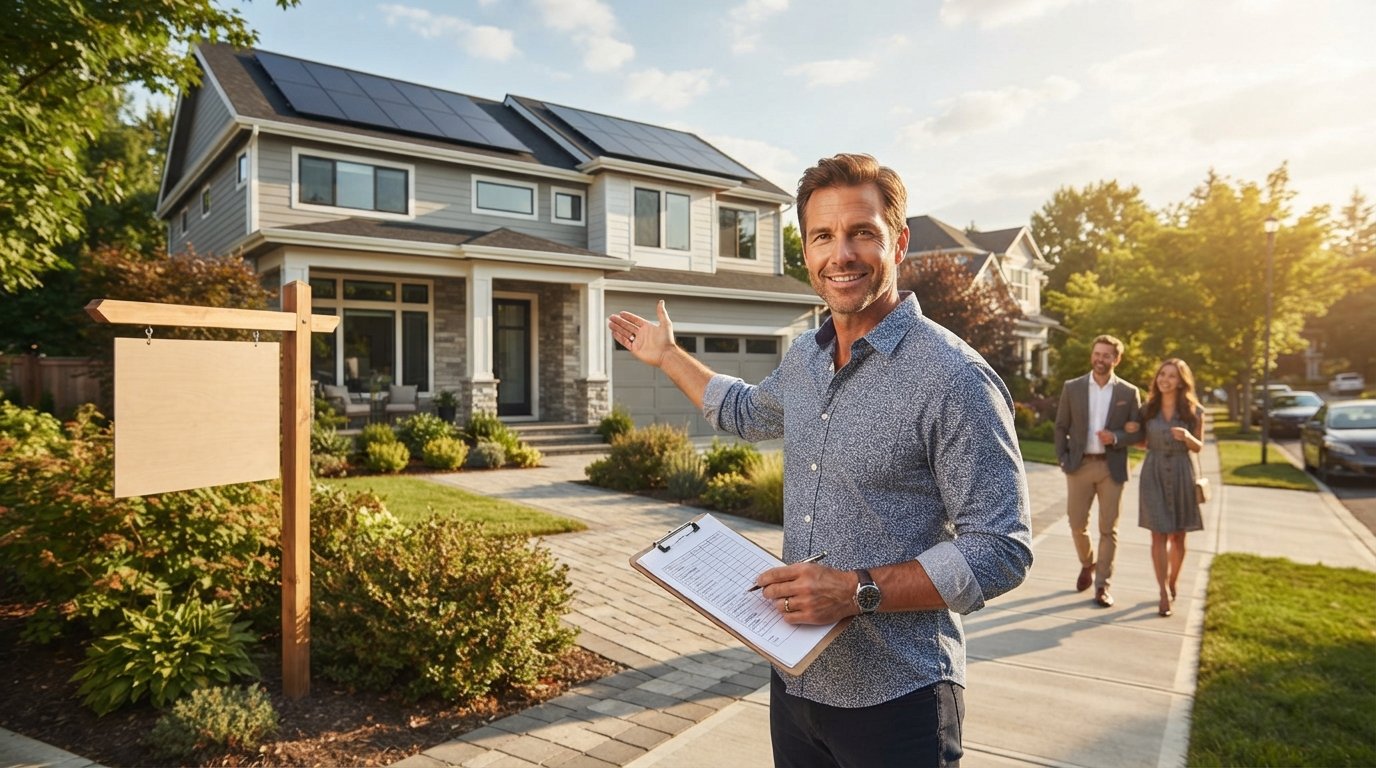
Solar for Rental Properties: A Landlord Guide
Solar for rental properties can boost rent and property value. This landlord guide covers financing, incentives, and how to structure solar for tenants.

By Benjamin Taylor
Learn more about Solar Panel Installation and Repair for guides, costs, and what to expect.
Compare Solar Panel Installation and Repair Pros Near You

Enter your ZIP code to compare top-rated local professionals and request free quotes.
Rental property owners face a unique dilemma in 2026: tenants pay the electric bills, so why should a landlord invest in solar panels? The answer lies in a shifting market where energy costs are rising, tenant demand for sustainable housing is growing, and new financing models allow landlords to add value without massive upfront costs. Whether you own a single duplex or a portfolio of apartment buildings, solar for rental properties can transform a standard investment into a premium, high-demand asset. This landlord guide breaks down the financial mechanics, legal considerations, and practical steps to make solar work for your bottom line.
The Financial Case for Solar on Rental Properties
For years, the conventional wisdom held that solar panels only benefited homeowners who lived in the property and paid the utility bills. That logic is outdated. Today, landlords can leverage solar to increase property value, attract higher-quality tenants, and even generate new revenue streams. The key is understanding how to structure the investment so that the returns outweigh the costs, regardless of who pays the electric bill.
One of the most immediate benefits is the ability to charge higher rent. A 2025 study by the National Renewable Energy Laboratory found that rental units with solar panels command rent premiums of 5 to 10 percent compared to identical units without solar. In competitive rental markets like Austin, Phoenix, and Tampa, that premium can mean thousands of dollars in additional annual income. Tenants are increasingly willing to pay more for predictable energy costs, especially as utility rates continue to climb.
Beyond rent premiums, landlords can also reduce their own operating expenses if they cover common area electricity. For multi-family buildings, solar can offset the cost of powering hallways, laundry rooms, and outdoor lighting. That directly improves net operating income (NOI), which is the metric commercial appraisers use to value apartment buildings. A higher NOI translates into a higher property valuation when you sell or refinance.
How to Structure Solar for Tenant-Occupied Units
The biggest hurdle for landlords is the split incentive: you pay for the solar system, but the tenant pays the utility bill. If you install solar and the tenant receives the benefit of lower electric bills, you have essentially gifted them a monthly raise. To avoid this, landlords must structure the solar installation so that the financial benefit flows back to the property owner. There are three primary models to consider.
The first is the landlord-owned system with a utility bill back arrangement. In this model, you install solar and continue to pay the utility bill (or a portion of it), then include a fixed energy charge in the tenant's lease. This is common in commercial real estate and is starting to appear in residential leases. The tenant pays a predictable amount for energy, you capture the solar savings, and everyone avoids the hassle of switching utility accounts.
The second model is the solar lease or power purchase agreement (PPA) assigned to the tenant. Here, a third-party solar company owns the system, and the tenant signs an agreement to purchase the solar electricity at a rate lower than the utility's. The landlord does not pay for the system, but the tenant gets clean energy and lower bills. This model works well for landlords who want to offer solar as an amenity without any capital outlay. However, you must ensure the lease or PPA does not complicate the property sale or refinance.
The third model is the common area or virtual net metering approach. For multi-family properties, you can install a solar array that feeds into the common area meter, directly reducing your operating expenses. Some states also allow virtual net metering, where the solar credits are allocated to individual tenant accounts. This is ideal for apartment buildings where individual unit metering is not practical.
Key Incentives and Tax Credits for Landlords
One of the most powerful tools for landlords is the federal Investment Tax Credit (ITC). As of 2026, the ITC remains at 30 percent for commercial solar installations, and residential rental properties can qualify if the landlord owns the system and pays the electric bill for common areas. The ITC is a dollar-for-dollar credit against your federal tax liability, which means a $50,000 solar system could yield a $15,000 tax credit. That significantly shortens the payback period.
In addition to the ITC, landlords can take advantage of accelerated depreciation. Solar panels are classified as five-year property under the Modified Accelerated Cost Recovery System (MACRS), which allows you to deduct a large portion of the system's cost in the first few years. When combined with the ITC, the effective cost of a solar system can be reduced by 50 percent or more. You should consult a tax professional to confirm your eligibility, as rules vary based on your entity structure and the portion of the property that is rented versus owner-occupied.
State and local incentives also play a role. Many states offer additional rebates, tax exemptions, or performance-based incentives (like SRECs) for solar installations. For example, Texas and Florida have property tax exemptions for solar equipment, which prevents your property taxes from increasing due to the added value of the solar system. These incentives can vary widely, so it is important to research your specific market. You can use a free solar savings estimator to get a rough idea of potential returns before committing to a full feasibility study.
Legal and Lease Considerations
Before you install solar on a rental property, you need to update your lease agreements and understand the legal landscape. Solar panels are a permanent improvement to the property, and they may affect the tenant's rights and responsibilities. A well-drafted lease should include a solar addendum that explains who owns the system, who is responsible for maintenance, and how the solar savings (or charges) are handled.
If you are using a lease or PPA, the tenant will have a separate contract with the solar company. You must ensure that this contract does not conflict with your lease terms. For example, if the tenant defaults on the solar lease, the solar company may have the right to remove the panels, which could leave your roof with holes and your property with a damaged reputation. Always review third-party solar contracts with a real estate attorney before signing.
Another critical consideration is the impact on property insurance. Some insurers may require additional coverage for solar panels, or they may exclude damage from certain events. You should notify your insurance carrier before installation to ensure you have adequate coverage. In some cases, adding solar can actually lower your insurance premiums if it is part of a larger energy efficiency upgrade, but this is not guaranteed.
Installation Logistics and Tenant Relations
Installing solar on a rental property requires coordination with your tenants. The installation process typically takes one to three days, during which workers will need access to the roof, the electrical panel, and possibly the attic. You should provide tenants with ample notice and schedule the work at a time that minimizes disruption. In multi-unit buildings, you may need to arrange for temporary power outages, which should be communicated well in advance.
Tenant relations are also important for the long-term success of your solar investment. If tenants are responsible for keeping the panels clean (which is rarely recommended due to safety risks), you should clarify that in the lease. More commonly, the landlord retains responsibility for maintenance, which means you need to budget for occasional cleaning and inspection. Solar panels are generally low-maintenance, but they do require periodic checks to ensure optimal performance.
You should also consider how solar will affect your ability to attract and retain tenants. Marketing the property as "solar-powered" can be a strong differentiator, especially in eco-conscious markets. Highlighting the potential for lower utility bills can help you fill vacancies faster and justify higher rent. Some landlords even provide tenants with a monthly energy report that shows how much solar energy was produced, which reinforces the value of the amenity.
Financing Options for Landlords
One of the biggest barriers to solar for rental properties is the upfront cost. Fortunately, there are several financing options designed specifically for landlords and commercial property owners. The right choice depends on your cash flow, tax situation, and long-term investment strategy.
- Cash purchase: If you have available capital, paying cash for solar yields the highest return on investment. You capture all the incentives, avoid interest payments, and maximize your monthly savings.
- Solar loan: Many banks and specialty lenders offer solar loans with terms of 5 to 20 years. These loans are often unsecured or secured by the solar equipment, and the interest may be tax-deductible if the system is used for business purposes.
- Property Assessed Clean Energy (PACE): In some states, landlords can finance solar through PACE programs, which attach the loan to the property tax bill. This allows you to spread the cost over 20 years and transfer the remaining balance to a new owner if you sell.
- Solar lease or PPA: As mentioned earlier, these third-party ownership models require no upfront cost but may reduce your long-term savings. They are best for landlords who want to offer solar without taking on debt or maintenance responsibilities.
When evaluating financing options, consider the impact on your debt-to-income ratio and your ability to refinance. Some lenders may view solar loans as a positive improvement, while others may be cautious about additional debt. It is wise to consult with a commercial mortgage broker who understands renewable energy projects.
Maximizing ROI: Tips for Landlords
To get the most out of your solar investment, you need to think like a portfolio manager. Solar is not just a utility upgrade; it is a financial asset that should be optimized for maximum return. Here are several strategies to boost your ROI.
First, size the system correctly. Oversizing the array can lead to wasted energy and lower returns, while undersizing it may not deliver the savings you need to justify the investment. Work with a qualified installer who can perform a load analysis based on your property's historical energy usage. If you do not have access to that data (for example, if tenants pay the bills), you can estimate usage based on square footage and local climate.
Second, consider adding battery storage. Batteries allow you to store excess solar energy and use it during peak demand periods when utility rates are highest. They also provide backup power during outages, which is a valuable amenity for tenants. While batteries add to the upfront cost, they can increase your property's resilience and appeal to tenants who work from home or have medical needs.
Third, take advantage of net metering policies. In states with strong net metering, you can export excess solar energy to the grid and receive credits on your utility bill. These credits can be used to offset future consumption, effectively turning your property into a small power plant. However, net metering policies vary by state and utility, so you must verify the rules in your area.
Finally, keep meticulous records of your solar production and savings. This data is essential for calculating your actual ROI and for demonstrating the value of the solar system to potential buyers or appraisers. A well-documented solar installation can increase your property's resale value and make it more attractive to investors who prioritize sustainability.
Common Pitfalls to Avoid
While solar can be a lucrative investment for landlords, there are several pitfalls that can erode your returns. One of the most common is failing to account for roof condition. If your roof is more than 10 years old, you should replace it before installing solar. Otherwise, you may have to remove and reinstall the panels when the roof needs replacement, which adds significant cost and hassle.
Another pitfall is ignoring the fine print in solar contracts. Some leases and PPAs include escalator clauses that increase the rate you pay for solar electricity by 1 to 3 percent per year. Over a 20-year term, that can add up to thousands of dollars in extra costs. Always read the contract carefully and negotiate terms that align with your long-term financial goals.
You should also be wary of installers who promise unrealistic savings. Solar is a mature technology, and the savings are predictable, but they depend on factors like shading, orientation, and local utility rates. If an installer guarantees that you will eliminate your electric bill entirely, be skeptical. A reputable installer will provide a range of savings estimates and explain the assumptions behind them.
Finally, do not overlook the importance of proper permitting and inspections. Solar installations require building permits and electrical inspections, and cutting corners can lead to costly fines or safety hazards. Always work with licensed and insured contractors who are familiar with local codes and regulations.
Finding the Right Solar Partner
Choosing the right solar installer is critical to the success of your investment. You want a company that has experience with rental properties and understands the unique financial and legal considerations involved. Look for installers who have a proven track record, positive reviews, and certifications from organizations like the North American Board of Certified Energy Practitioners (NABCEP).
It is also helpful to get multiple quotes and compare them side by side. Prices can vary significantly between installers, and the cheapest option is not always the best. Pay attention to the quality of the equipment, the warranty terms, and the level of customer service. A good installer will be transparent about costs, timelines, and expected performance.
For landlords who want to simplify the process, platforms like SolarEnergy.ai offer comprehensive resources and tools to compare solar options and connect with reputable providers. These services can help you navigate the complexities of solar financing, incentives, and installation without having to become an expert yourself.
Solar for rental properties is no longer a niche strategy; it is a mainstream investment that can boost your income, increase your property value, and attract quality tenants. By understanding the financial models, legal requirements, and practical steps outlined in this landlord guide, you can make an informed decision that aligns with your goals. Whether you own a single-family rental or a multi-unit apartment building, the right solar installation can turn your property into a high-performing asset for years to come.