
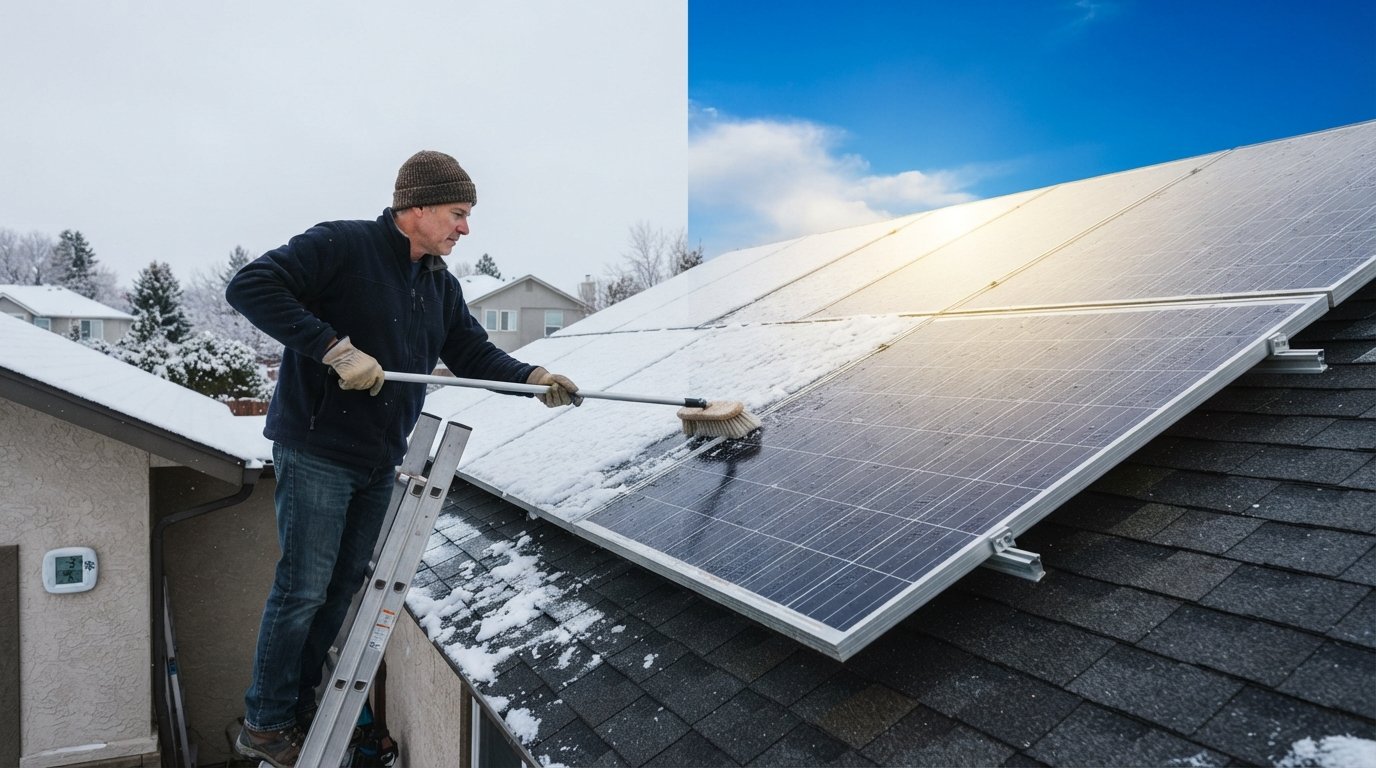
Seasonal Solar Efficiency: Boost Winter and Summer Output
Discover how seasonal solar panel efficiency winter summer optimization can boost your energy savings with practical tilt, cleaning, and usage tips.

By Benjamin Taylor
Learn more about Solar Panel Cleaning for guides, costs, and what to expect.
Compare Solar Panel Cleaning Pros Near You

Enter your ZIP code to compare top-rated local professionals and request free quotes.
Solar panels do not produce energy at the same rate all year. You have likely noticed that your system generates more electricity in July than in January, and that gap can be striking. This variation is not a flaw in your equipment. It is the natural result of Earth's tilt, changing sun angles, and weather patterns. Understanding these shifts is the first step toward what industry experts call seasonal solar panel efficiency winter summer optimization. When you know why output drops and spikes, you can take practical steps to flatten that curve, save more money, and make your investment work harder every single month.
Why Solar Output Changes With the Seasons
The sun's path across the sky changes dramatically between summer and winter. In summer, the sun rises higher and stays in view longer, giving your panels more direct light hours. In winter, the sun stays low, days shorten, and the same panel surface receives less energy per square foot. This is not a subtle difference. A typical home in the northern United States can see winter production fall to 40 to 60 percent of its summer peak, depending on latitude and local weather.
Temperature also plays a role, and it is a counterintuitive one. Solar panels actually operate more efficiently in cool weather. Heat slows the flow of electrons inside the cells, which lowers voltage and reduces overall output. So a hot summer afternoon can hurt performance even as long daylight hours boost total daily generation. Winter's cold air helps panels run closer to their rated capacity, but the shorter days and lower sun angle usually outweigh that benefit.
Seasonal solar panel efficiency winter summer optimization is not about chasing one perfect season. It is about understanding these opposing forces and designing a system, or adjusting your habits, to capture the most energy possible across the whole year.
Winter Challenges and Real Solutions
Winter presents three main obstacles: fewer daylight hours, a lower sun angle, and the possibility of snow or ice covering your panels. Many homeowners assume that snow is the biggest problem, but it is often the least of these concerns. A light dusting usually slides off sloped panels quickly, especially if they are mounted at a good angle. Even a heavy snow cover rarely lasts long because dark panels absorb sunlight and melt the underside, creating a slippery layer that lets the snow shed naturally.
The bigger issue is the sun itself. In December, the sun may climb only 25 degrees above the horizon at midday in northern regions. That low angle means sunlight hits your panels at a steep slant, and more of it reflects away instead of being absorbed. The solution is to adjust your panel tilt seasonally if your mounting system allows it. A steeper winter angle, closer to 60 degrees in northern areas, catches more of that low sun. Many ground-mounted systems and adjustable roof racks make this easy.
- Clear light snow with a soft roof rake designed for panels; never use metal tools or harsh chemicals.
- Trim or remove trees that cast shadows on your array during the short winter days.
- Ask your installer about seasonal tilt adjustments when you first design your system.
- Use monitoring software to spot unusual drops that might indicate a hidden obstruction.
If your panels are fixed at a standard 30 degree tilt, you still have options. Simply keeping them clear and clean helps. Dirt, leaves, and bird droppings block sunlight all year, but the effect is worse in winter when every photon counts. A routine cleaning in late autumn and again in late winter can boost output noticeably. Also, review your energy usage. Winter mornings and evenings are dark, so shifting heavy appliance use to midday hours aligns your consumption with your solar production.
Summer Performance and the Heat Factor
Summer brings long days and a high sun, which is why your production peaks in June or July. But summer also brings heat, and heat is the enemy of solar efficiency. Most panels lose about 0.3 to 0.5 percent of their rated power for every degree Celsius above 77 degrees Fahrenheit. On a 95 degree day, your panels could be running 5 to 8 percent below their rated output. Over a week of extreme heat, that adds up to a meaningful loss.
Good airflow under your panels helps dissipate heat. Roof-mounted systems with a few inches of clearance perform better than those mounted flush against the roof surface. If you are planning a new installation, ask about mounting systems that promote ventilation. Ground-mounted arrays naturally get better airflow and run cooler, which is one reason they often outperform roof systems in hot climates.
Another summer consideration is the angle of the sun. At noon in July, the sun is nearly overhead. A panel tilted at 30 degrees is actually not optimal for catching that high sun. Lowering the tilt in summer, closer to 15 or 20 degrees, can capture more midday energy. Again, adjustable mounts make this simple, but even fixed systems benefit from an angle that splits the difference between summer and winter positions.
Optimization Strategies for Every Season
Seasonal solar panel efficiency winter summer optimization is not a one-time task. It is an ongoing practice that combines hardware adjustments, smart usage, and careful monitoring. Here is a practical framework you can apply throughout the year.
Adjust Your Tilt Angle
If you have an adjustable mount, change the tilt four times a year: steeper in winter, shallower in summer, and somewhere in between for spring and fall. A good rule of thumb is to use your latitude plus 15 degrees in winter and your latitude minus 15 degrees in summer. For a home at 35 degrees latitude, that means a winter tilt of 50 degrees and a summer tilt of 20 degrees. Even a single adjustment in late October and another in early April can recover a meaningful percentage of annual output.
Keep Panels Clean and Clear
Dust, pollen, and bird droppings accumulate on panels and block sunlight. In dry climates, a month without rain can leave a visible film. Cleaning your panels two to four times per year is usually enough. Use a soft brush, mild soap, and water, or hire a professional. In winter, remove heavy snow promptly to restart production, but never use a shovel or sharp tool that could scratch the glass.
Use Monitoring Data
Modern solar systems include monitoring that shows daily, weekly, and monthly production. Compare your output to the expected values for your area, which your installer or an online solar calculator can provide. If you see a sudden drop that does not match weather patterns, investigate. It could be a shading issue, a dirty panel, or an inverter fault. Catching problems early prevents lost energy for weeks or months.
Shift Your Energy Use
Run your dishwasher, washing machine, and pool pump during peak sun hours. Charge your electric vehicle and any home batteries in the middle of the day. Set your smart thermostat to pre-cool or pre-heat your home while the sun is high, then let it coast in the evening. These habits reduce the amount of grid power you pull, which matters most in winter when production is low and in summer when air conditioning demand spikes.
The Financial Impact of Seasonal Optimization
Every kilowatt-hour you generate is a kilowatt-hour you do not buy from the grid. In the United States, the average residential electricity rate is now above 16 cents per kilowatt-hour, and it is higher in many states like California, New York, and Hawaii. If your system produces 10,000 kilowatt-hours per year, even a 10 percent seasonal loss means 1,000 kilowatt-hours wasted, which is roughly $160 in lost savings annually. Over a 25 year system life, that is $4,000 or more.
Seasonal optimization also matters for net metering and time-of-use rates. Many utilities credit you for excess solar power you send to the grid, but they may pay you a wholesale rate that is lower than the retail rate you pay when you pull power back. Shifting your usage to match production reduces the gap between what you export and what you import. In winter, when your system produces less, every kilowatt-hour you save by shifting load becomes more valuable.
If you are still in the planning stage, consider how seasonal patterns affect your payback period. A system sized for summer needs may leave you with a large utility bill in December. Work with a reputable installer who uses historical weather data and your actual usage to right-size your array. You can also add a few extra panels to cover winter shortfalls, which is often cheaper than adding battery storage.
Climate-Specific Considerations
Your local climate changes the optimization playbook. In the snowy Northeast, winter sun is precious, and keeping panels clear is the top priority. In the desert Southwest, summer heat is brutal, so ventilation and tilt adjustments matter most. In the Pacific Northwest, overcast winters mean diffuse light, and panels still produce, though at a lower rate. In that region, optimizing for the low, gray winter sun may be more important than chasing summer peaks.
For homeowners in hurricane-prone areas like Florida or Texas, summer storms can bring debris and prolonged cloud cover. Ensuring your mounting system is certified for high winds protects your investment. In all climates, a quick seasonal inspection of your racking, wiring, and inverter connections prevents small issues from becoming big losses.
How to Get the Most From Your Solar Investment
The best time to think about seasonal performance is before you sign a contract. Ask every installer how their design accounts for winter and summer sun angles. Request a production estimate for each month, not just an annual total. Compare those numbers across different equipment options. Premium panels with better temperature coefficients, the rate at which output drops as heat rises, hold up better on hot summer afternoons. Microinverters or power optimizers can limit the impact of partial shading that changes with the seasons.
If you already have solar, seasonal solar panel efficiency winter summer optimization is still within reach. Start with a professional inspection to confirm your system is healthy. Then implement the tilt, cleaning, and usage strategies described above. Track your monthly production and compare it to the same month last year. Small improvements in winter can have an outsized effect on your annual savings because winter is when you are most likely to pay retail rates for grid power.
For a deeper dive into system design, financing, and incentive programs, explore the resources at SolarEnergy.ai, which offers detailed guides and tools for homeowners. And if you are considering a new system or want to upgrade your existing array, getting multiple quotes from vetted installers is the smartest move. The right design, paired with good seasonal habits, can make your panels produce more energy, save you more money, and help you reach energy independence faster.
Seasonal changes are not something to fear. They are something to plan for. With a few adjustments and a little attention, your solar panels can deliver strong performance in every month of the year, keeping your bills low and your clean energy goals on track.