
Roof vs Ground Mount Solar: Homeowner Comparison Guide
Compare roof vs ground mount solar panels for your home. Call 8337937166 for free quotes and expert guidance on the best setup for your property.

By Liam Parker
Learn more about Solar Panel Installation and Repair for guides, costs, and what to expect.
Compare Solar Panel Installation and Repair Pros Near You

Enter your ZIP code to compare top-rated local professionals and request free quotes.
Choosing between a roof mount and a ground mount solar system is one of the first major decisions a homeowner faces when going solar. The choice affects installation cost, energy production, maintenance needs, and even how quickly you break even on your investment. While roughly 80 percent of residential solar installations in the United States are roof mounted, ground mounts remain a powerful option for properties with the right space and conditions. This roof vs ground mount solar panels homeowner comparison breaks down the real differences so you can decide which setup fits your home, your budget, and your long term energy goals.
Before diving in, it helps to understand that neither option is universally better. A roof mount maximizes existing space and often costs less upfront, while a ground mount unlocks better sun exposure and easier access. The right answer depends on your roof's condition, your lot size, your local utility rules, and how long you plan to stay in your home. Let us walk through each factor in detail.
How Roof Mount and Ground Mount Systems Actually Work
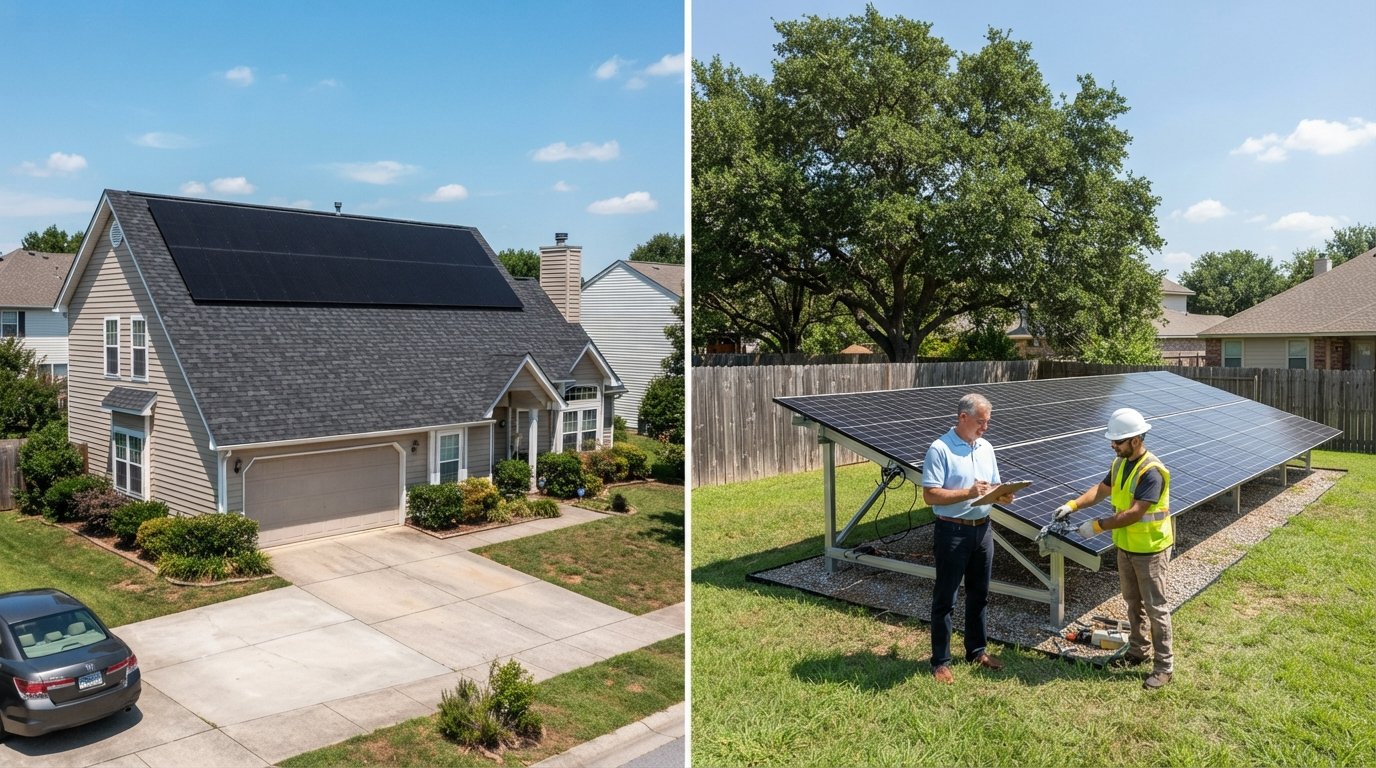
A roof mounted solar system uses mounting hardware that attaches directly to your roof's rafters or trusses. The panels sit a few inches above the roof surface, and the wiring typically runs through the attic and down to an inverter and electrical panel. Because the roof already exists, you avoid the cost of building a separate structure. This is why roof mounts dominate suburban neighborhoods: they are compact, visually unobtrusive, and integrate cleanly with most home designs.
A ground mounted system, by contrast, sits on a metal racking structure anchored into the earth. The most common design is a fixed tilt mount, which angles the panels toward the sun at a set degree. Some homeowners install pole mounts or tracking systems that follow the sun throughout the day, though these cost more. Ground mounts require open land, typically a backyard, side yard, or unused parcel, and they usually need trenching to run conduit from the array back to your home.
The mechanical difference matters because it shapes everything downstream: installation complexity, permitting, wind load requirements, and how easily you can expand the system later. Understanding this foundation makes the rest of the comparison much clearer.
Cost Comparison: What Each Option Really Costs
Upfront cost is often the deciding factor for homeowners. Roof mounted systems generally cost less per watt because they reuse your existing roof structure. You are not paying for steel posts, concrete footings, or long trenching runs. According to industry data, roof mounts typically run between $2.50 and $3.50 per watt installed, depending on your region and equipment.
Ground mounts add expense for the racking foundation, trenching, and sometimes extra permitting. That can push the installed cost to $3.00 to $4.50 per watt. However, ground mounts sometimes offset this by allowing a steeper tilt angle, which can increase annual production by 5 to 15 percent compared to a flatter roof mount. Over 25 years, that extra output can narrow or even erase the upfront cost gap.
Here is a quick breakdown of the main cost drivers:
- Roof mount: lower labor, no trenching, but may require roof repairs or reinforcement before installation.
- Ground mount: higher labor and materials, trenching to connect to your home, but easier to service and expand.
- Both: inverter, wiring, permits, and labor are shared costs, though ground mounts often need longer wire runs.
Financing works similarly for both. You can pay cash, take a solar loan, or sign a lease or power purchase agreement (PPA). Some lenders treat ground mounts the same as roof mounts, but a few may charge slightly higher rates because the system is considered a detached improvement. For a deeper look at how to weigh these numbers, see this solar system investment analysis for homeowners, which walks through payback periods and long term returns.
It is also worth noting that ground mounts can qualify for the same 30 percent federal Investment Tax Credit (ITC) as roof mounts, provided the system serves your home. Always confirm current incentive details with a tax professional, since program rules can change.
Energy Production: Which System Generates More Power
Solar panels produce the most electricity when they face the sun at an optimal angle. A ground mount gives you total control over tilt and orientation. If your roof faces east or west, or has multiple hips and valleys, a ground mount can point directly south at the ideal angle for your latitude. That often translates to higher kilowatt hour output per panel.
Roof mounts are constrained by your roof's pitch and direction. A south facing roof with a 30 to 40 degree pitch is close to ideal, but many homes do not have that. Shade from trees, chimneys, or nearby buildings also hits roofs harder because you cannot move the array. Ground mounts can be positioned in the sunniest part of your yard, away from shade.
Another production advantage for ground mounts is cooling. Panels lose efficiency as they heat up. Ground mounted arrays have better airflow underneath, which keeps them cooler and slightly more productive on hot days. In states like Arizona or Texas, that difference can add up over a year. Roof mounted panels sit closer to the roof surface, trapping more heat, though modern racking and panel designs have narrowed this gap.
That said, a well designed roof mount on a good roof will outperform a poorly placed ground mount every time. The key is to run a shade analysis and production estimate before committing to either option.
Installation, Permitting, and Maintenance Realities
Installation timelines differ noticeably. Roof mounts can often be installed in one to three days once permits are approved. Ground mounts take longer because of excavation, concrete curing, and trenching. Expect one to three weeks for a typical ground mount, plus additional time for inspections and utility interconnection.
Permitting is another differentiator. Roof mounts follow standard residential building codes that local inspectors see every day. Ground mounts may trigger additional zoning rules, setback requirements, or height restrictions. Some homeowners associations (HOAs) restrict ground mounts because they are visible from the street, while roof mounts are usually protected by solar access laws in many states.
Maintenance access is where ground mounts shine. You can walk up to the array, hose off dust, check connections, and clear snow without climbing a ladder. Roof mounts require safe roof access, and many homeowners hire professionals for cleaning and inspections. If a panel fails or an optimizer needs replacement, ground mounts are far easier and safer to service.
Here are the practical maintenance considerations to weigh:
- Ground mounts: easy DIY cleaning, simple visual inspections, low fall risk.
- Roof mounts: harder access, higher labor cost for service, potential roof wear over decades.
- Both: inverters and wiring need periodic checks, and production monitoring catches issues early.
One more factor: roof age. If your roof is within 5 to 10 years of needing replacement, installing solar on it can create a costly problem later. You would have to remove and reinstall the panels to replace the roof. A ground mount avoids that headache entirely, which is a major reason some homeowners choose it even when their roof is suitable.
Space, Aesthetics, and Property Considerations
Roof mounts use space you already have and do not consume any of your yard. For homeowners with small lots, that is a decisive advantage. Ground mounts require a clear area, typically 300 to 500 square feet for a standard 6 to 8 kilowatt system, plus setback from property lines. If your yard is shaded, sloped, or already used for other purposes, a ground mount may not be practical.
Aesthetics cut both ways. Some homeowners prefer the clean look of panels hidden on the roof. Others like the look of a ground array and the visibility it brings. HOAs and local design review boards may have opinions, so check rules before you buy. In many states, solar access laws override unreasonable HOA restrictions, but ground mounts are sometimes treated differently than roof mounts.
Resale value is another consideration. Studies consistently show that solar homes sell for a premium, and both roof and ground mounts can contribute. However, a ground mount that occupies a large portion of a backyard might limit buyer appeal for families who want open lawn space. A roof mount rarely changes how buyers use the property, which can make it the safer choice for resale.
If you are comparing quotes for either option, a service like SolarEnergy.ai can help you understand industry pricing and incentive trends before you talk to installers. And if you want free, no obligation quotes from vetted local providers, FreeSolarPowerQuotes connects homeowners with reputable third party solar companies across the United States.
When to Choose Roof Mount vs Ground Mount
The decision often comes down to a few clear signals. Choose a roof mount when your roof is in good condition, faces generally south, has minimal shade, and your budget is tight. Choose a ground mount when you have open land, your roof is shaded or aging, you want maximum production, or you plan to expand the system later.
Consider these scenarios:
- New roof, south facing, small lot: roof mount is almost always the better value.
- Shaded roof, large backyard, long term owner: ground mount wins on production and serviceability.
- HOA restrictions on visible panels: roof mount may be your only option.
- Future expansion plans: ground mount makes adding panels far easier.
Many homeowners ultimately choose based on a single constraint, whether that is budget, shade, roof age, or yard space. A professional site assessment will confirm which path makes sense for your property.
Getting Quotes and Making the Final Call
Once you understand the tradeoffs, the next step is gathering real numbers. Request quotes for both roof and ground mount designs if your property supports both. A good installer will provide a production estimate, a 25 year savings projection, and a clear breakdown of costs and incentives. Compare at least three quotes to spot outliers and ensure you are getting fair pricing.
Ask each installer about warranty coverage, monitoring, and how they handle service calls for each mount type. Ground mounts often come with longer racking warranties because the structure is more exposed, while roof mounts may include roof penetration warranties. Read the fine print and confirm who is responsible for leaks or damage.
Finally, think about your time horizon. If you plan to stay in your home for 10 or more years, the long term production and maintenance advantages of a ground mount may justify the higher upfront cost. If you may sell within a few years, a roof mount's lower cost and broader buyer appeal often make more sense. Either way, solar remains one of the most reliable ways to cut electricity bills, increase home value, and gain energy independence. With the right information and a few solid quotes, you can choose the mount type that serves you best.