
Polycrystalline Solar Panels: A Smart 2026 Choice
Polycrystalline solar panels offer a cost-effective way to cut electricity bills. Learn how they work, their pros and cons, and if they fit your home.

By Nathan Russell
Learn more about Solar Panel Installation and Repair for guides, costs, and what to expect.
Compare Solar Panel Installation and Repair Pros Near You

Enter your ZIP code to compare top-rated local professionals and request free quotes.
When you start shopping for solar panels, you will quickly notice a split between two main types: monocrystalline and polycrystalline. While monocrystalline panels often steal the spotlight with their sleek black look and high efficiency, polycrystalline solar panels remain a powerful and cost-effective option for many homeowners. If you are looking to cut your electricity bills without paying a premium for top-tier efficiency, these panels deserve a serious look. In this guide, we break down how they work, their real-world performance, and how to decide if they are the right fit for your home.
What Are Polycrystalline Solar Panels?
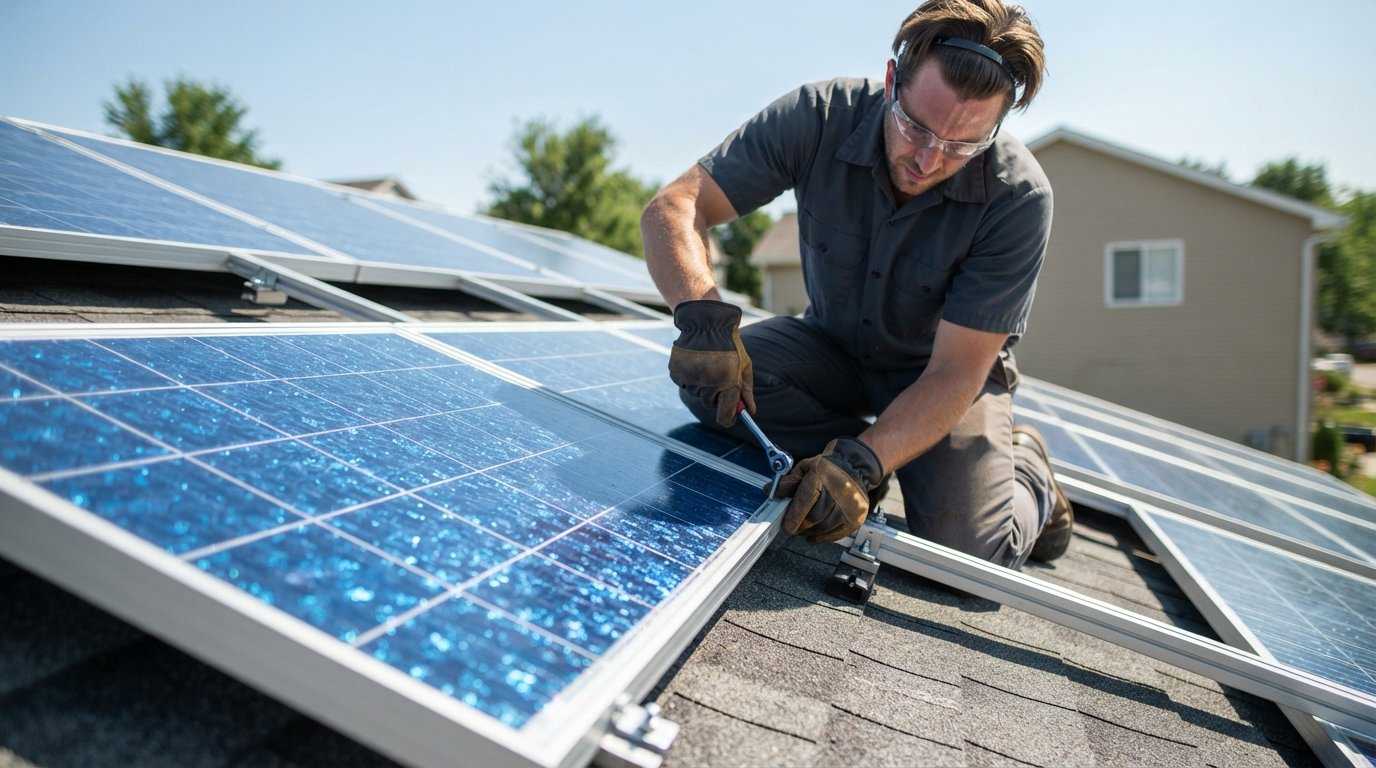
Polycrystalline solar panels, also known as multi-crystalline panels, are made by melting multiple silicon crystals together and pouring them into square molds. This manufacturing process is simpler and less wasteful than the one used for monocrystalline panels, which are cut from a single continuous crystal. The result is a panel with a distinctive blue, speckled appearance that many people recognize on residential roofs.
Because they use multiple silicon fragments, polycrystalline panels are less efficient at converting sunlight into electricity than their monocrystalline counterparts. Typical efficiency ranges from 15% to 17%, compared to 18% to 22% for monocrystalline. However, they make up for this with a lower price per watt, making them an attractive option for budget-conscious homeowners with ample roof space. In our guide on monocrystalline panels, we explain how the two technologies compare in detail, but the short version is that polycrystalline offers a better value if you are not limited by roof area.
How Do Polycrystalline Panels Work?
Like all photovoltaic panels, polycrystalline panels generate electricity through the photovoltaic effect. When sunlight hits the panel, photons knock electrons loose from the silicon atoms, creating a flow of direct current (DC) electricity. An inverter then converts this DC power into alternating current (AC) that your home can use. The key difference lies in the silicon structure: polycrystalline panels have multiple crystal boundaries, which slightly impede electron flow and reduce efficiency compared to a single-crystal structure.
Despite this, the technology has improved significantly over the past decade. Modern polycrystalline panels perform well in a variety of climates, and their temperature coefficient (how much output drops as temperatures rise) is acceptable for most residential installations. They also degrade at a similar rate to monocrystalline panels, typically losing about 0.5% of their output per year, meaning they will still produce at around 85% efficiency after 25 years.
Efficiency and Performance: What to Expect
It is important to understand that efficiency is not the only metric that matters. A 300-watt polycrystalline panel and a 300-watt monocrystalline panel will produce the same amount of power under identical conditions. The difference is that the monocrystalline panel will be smaller in physical size. For most homeowners, this means the only real trade-off is the number of panels needed to reach your desired system size.
Here are the key performance factors to consider:
- Efficiency range: 15% to 17%, which is lower than monocrystalline but still suitable for most homes.
- Temperature coefficient: Typically around -0.4% per degree Celsius, meaning performance drops slightly in hot weather.
- Lifespan: Most manufacturers offer 25-year performance warranties, with panels expected to last 30 years or more.
- Degradation rate: Around 0.5% per year, so after 25 years you can expect about 85% of original output.
If your roof has plenty of unobstructed space and you are not trying to maximize every square foot, polycrystalline panels can be an excellent choice. They are especially popular for ground-mounted systems and larger residential installations where space is not a constraint. However, if you have a small or complex roof with limited sun exposure, you may need the higher efficiency of monocrystalline panels to meet your energy needs.
Cost Comparison: Polycrystalline vs. Monocrystalline
The main selling point of polycrystalline solar panels is their cost. On average, they are 10% to 20% cheaper than monocrystalline panels of the same wattage. For a typical 6 kW residential system, this can translate to savings of $1,000 to $2,500 on the equipment alone. When you factor in installation and other soft costs, the overall system price can be significantly lower.
But the cost comparison goes beyond the initial purchase. Because polycrystalline panels are slightly less efficient, you may need more panels to achieve the same output. This can increase racking and labor costs, though these are usually modest. Additionally, if your roof has limited space, the lower efficiency could force you to install a smaller system, which might not cover your full electricity usage. That is why it is critical to get a professional assessment before making a decision.
To get an accurate picture of your potential savings, use a solar cost calculator that accounts for your location, electricity usage, and available roof area. The calculator can help you compare the total cost of ownership between panel types, including payback period and return on investment.
Pros and Cons of Polycrystalline Panels
To help you weigh your options, here is a balanced look at the advantages and disadvantages:
Pros:
- Lower upfront cost: You get more watts per dollar, which is ideal for larger systems.
- Less manufacturing waste: The production process uses more of the silicon, making it slightly more environmentally friendly.
- Proven reliability: Polycrystalline technology has been around for decades, and modern panels are highly durable.
- Good performance in low light: They tend to perform reasonably well in overcast conditions, though not as well as some premium monocrystalline models.
Cons:
- Lower efficiency: You need more panels for the same output, which can be a problem on small roofs.
- Higher heat tolerance: They lose more efficiency in hot climates compared to monocrystalline panels.
- Aesthetic considerations: The blue, marbled look is less uniform than the all-black monocrystalline panels, which some homeowners find less attractive.
Ultimately, the decision comes down to your specific situation. If you have a large, unshaded roof and want to maximize your return on investment, polycrystalline panels are a smart financial move. If you prioritize aesthetics or have limited space, monocrystalline might be worth the extra cost.
Installation and Maintenance Considerations
Installing polycrystalline panels is no different from any other solar panel type. The same mounting systems, inverters, and electrical connections are used. However, because you may need more panels, the installation can take slightly longer and require more roof penetrations. It is essential to work with a qualified installer who can assess your roof's structural integrity and ensure proper spacing for ventilation and maintenance.
Maintenance is relatively simple. Polycrystalline panels have no moving parts, and their tempered glass surface is designed to withstand hail and wind. The main task is keeping them clean, especially in dusty or pollen-heavy areas. In our guide on cleaning solar panels on pitched roofs, we explain safe methods and frequency recommendations. Generally, a bi-annual cleaning with a hose and soft brush is sufficient, but you may need more frequent cleaning in arid regions.
Long-Term Savings and ROI
The financial case for polycrystalline panels is strong, especially if you plan to live in your home for many years. The lower upfront cost means a shorter payback period, typically 6 to 10 years depending on your electricity rates and available incentives. After that, you enjoy free electricity for the remaining life of the system, which can be 20 years or more.
To maximize your savings, take advantage of the federal Investment Tax Credit (ITC), which offers a 30% credit on your total system cost. Many states and utilities also offer rebates or performance-based incentives. Make sure to research what is available in your area, as these can significantly reduce your net investment.
When comparing quotes, ask each installer to provide a detailed breakdown of equipment costs, including the specific panel model and wattage. This will help you make an apples-to-apples comparison. A reputable installer will be happy to explain why they recommend a particular panel type and how it affects your system's performance and payback.
How to Get the Best Deal on Polycrystalline Panels
Once you have decided that polycrystalline panels are right for you, the next step is finding a reliable installer and getting competitive quotes. The price of solar can vary widely based on your location, the complexity of your roof, and the installer's overhead. It is wise to get at least three quotes and compare them on equipment quality, warranty, and estimated production, not just the bottom line.
At FreeSolarPowerQuotes, we simplify this process by connecting you with vetted, pre-screened solar providers in your area. When you submit your information, you receive free, no-obligation quotes from multiple installers, allowing you to compare prices and services side by side. This approach helps you avoid the common pitfall of paying too much for a system that does not meet your needs.
Before signing any contract, verify that the installer is licensed and insured, and check their reputation with the Better Business Bureau. Also, review the warranty terms carefully. A good installer will offer a workmanship warranty of at least 5 years, and the panel manufacturer should provide a 25-year performance warranty.
Final Thoughts on Polycrystalline Solar Panels
Polycrystalline panels are a proven, budget-friendly way to generate clean energy and reduce your reliance on the grid. While they may not have the highest efficiency on the market, they offer an excellent balance of cost and performance for homeowners with adequate roof space. By understanding the trade-offs and getting professional advice, you can make a confident decision that aligns with your energy goals and budget.
If you are ready to explore solar options for your home, we encourage you to get free quotes from local installers. The process takes only a few minutes, and you will gain valuable insight into the costs and savings specific to your property. Whether you choose polycrystalline or another technology, going solar is a powerful step toward energy independence and long-term savings.