
How to Safely Clean Solar Panels: Top Products
Discover the best solar panel cleaning products safe for panels, plus DIY methods and pro tips to boost efficiency without voiding warranties.

By Brandon Moore
Learn more about Solar Panel Cleaning for guides, costs, and what to expect.
Compare Solar Panel Cleaning Pros Near You

Enter your ZIP code to compare top-rated local professionals and request free quotes.
Your solar panels work silently for decades, converting sunlight into savings. But as grime, dust, and bird droppings accumulate, they create a thin film that blocks the very rays your system needs. The result is a measurable drop in energy output, often by 5 to 20 percent, depending on your location and weather patterns. Many homeowners assume a rain shower will wash away the dirt, yet research shows that dry climates and urban pollution leave stubborn residues that rain cannot remove. This is where the right cleaning approach becomes essential.
However, the market is flooded with harsh chemicals, abrasive pads, and high-pressure tools that promise sparkling panels but can actually void your warranty or cause micro-cracks. The good news is that you do not need aggressive solutions. In fact, the safest and most effective method is often the simplest: deionized water, a soft brush, and a gentle squeegee. But when water alone fails, choosing among solar panel cleaning products safe for panels requires understanding what is safe for the glass, the frame, and the anti-reflective coating. This guide breaks down the best options, the ingredients to avoid, and a step-by-step routine that protects your investment while maximizing every watt of production.
Why Standard Glass Cleaners Can Damage Your Panels
Most household cleaners, such as window sprays, contain ammonia, alcohol, or acetone. These solvents strip away the hydrophobic coating that manufacturers apply to solar glass. This coating helps water bead off and prevents dirt from bonding. Once it is gone, your panels become dirtier faster, and you will need to clean them more often. Worse, some chemicals react with the aluminum frame or the sealant around the edges, leading to corrosion and potential moisture intrusion.
Abrasive pads, steel wool, or even a stiff-bristled brush can scratch the tempered glass. While the glass itself is tough, its anti-reflective layer is thin and delicate. Scratches reduce light transmission and create shadows that cause hot spots, which accelerate cell degradation. Additionally, using a pressure washer may force water into the junction box or under the frame, causing electrical shorts or delamination. For these reasons, professional installers and manufacturers consistently warn against anything that is not explicitly labeled for solar equipment.
Instead, you need products designed to dissolve mineral deposits, pollen, and bird droppings without leaving a residue. The safest category is deionized water, which contains no minerals, so it does not leave spots and does not conduct electricity. Many solar cleaning kits include a telescoping pole, a soft foam brush, and a deionized water filter. For tougher grime, look for biodegradable, phosphate-free, and pH-neutral formulas. These are safe for the glass and the environment, and they do not harm nearby plants or soil.
Top Solar Panel Cleaning Products Safe for Panels
After researching dozens of products and consulting with maintenance experts, we have narrowed down the most reliable options that consistently deliver clean panels without risking damage. Each product below has been evaluated for its ingredients, ease of use, and compatibility with standard solar panel warranties.
Deionized Water Systems and Filters
Deionized (DI) water is the gold standard in professional solar cleaning. It is water that has been filtered to remove nearly all dissolved minerals, so it acts as a natural solvent. It lifts dirt and grime without any chemical additives. When you use DI water with a soft brush, the dirt binds to the brush, and the pure water rinses it away without leaving mineral spots. For homeowners, a portable DI filter that attaches to a garden hose is a practical investment. These filters typically last for several hundred gallons, depending on your water hardness.
One example is the Unger Ninja Cleaning Kit, which includes a 25-foot pole, a microfiber pad, and a DI bottle. It is lightweight, easy to assemble, and safe for rooftop use. Another popular choice is the Solar Panel Cleaning Kit by WSL, which features a 60-inch pole and a soft foam head. While these kits are not cheap, they pay for themselves by preventing the need for professional cleaning services every few months.
pH-Neutral Biodegradable Soaps
If your panels have oily residues, such as from nearby traffic or industrial pollution, plain water may not be enough. In that case, choose a soap that is pH-neutral (around 7) and biodegradable. These soaps gently emulsify oils without attacking the protective coatings. Look for terms like "safe for solar panels," "no phosphates," and "no dyes." A few reputable brands include Simple Green Solar Panel Cleaner and Sun-ray Solar Cleaner. Both are concentrated, so a small bottle goes a long way, and they are safe for use on glass, aluminum, and plastic components.
When using any soap, always dilute it according to the manufacturer's instructions. Too much soap leaves a film that attracts more dirt. Apply the solution with a soft sponge or brush, then rinse thoroughly with clean water. Never let the soap dry on the panels, as it can etch the glass.
Specialized Solar Panel Cleaning Brushes and Squeegees
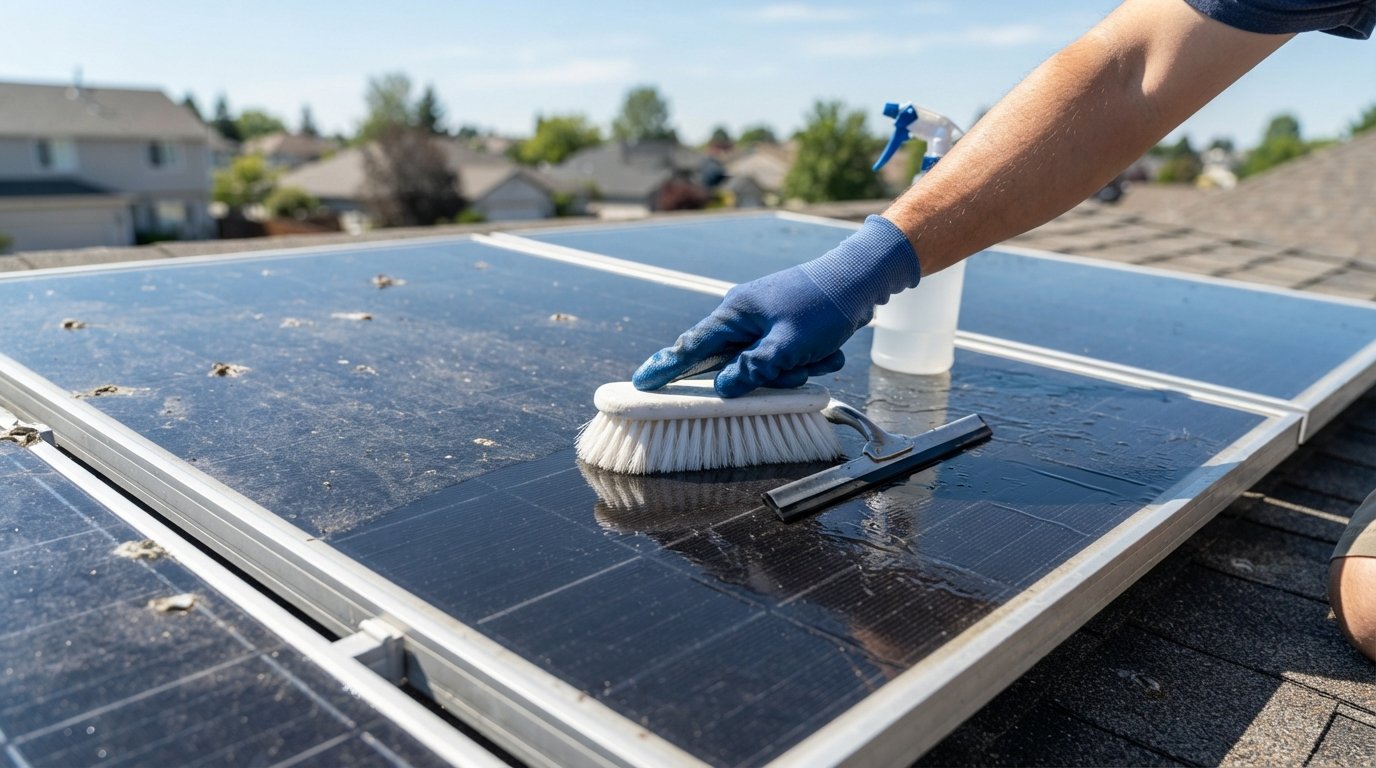
The tool matters just as much as the solution. A standard car wash brush may have stiff bristles that scratch the glass. Instead, use a brush with ultra-soft foam, microfiber, or lambswool sleeves. These materials trap dirt particles and lift them away without abrasive action. A squeegee with a soft rubber blade helps remove water without leaving streaks, especially if you are cleaning large ground-mounted arrays.
For roof-mounted panels, a telescoping pole with a built-in water feed simplifies the process. You can brush and rinse simultaneously, reducing the time you spend on a ladder. Many kits include a 90-degree angle adapter for hard-to-reach spots. Remember to clean your tools regularly, as a dirty brush can scratch panels just like dirty sandpaper.
DIY Solutions: Vinegar and Water
A mixture of distilled white vinegar and water (usually 1 part vinegar to 10 parts water) is a safe, effective DIY cleaner for light dust and mineral deposits. Vinegar is mildly acidic, which helps dissolve hard water spots, but it is gentle enough to avoid damaging the glass. However, do not use vinegar if your panels have a manufacturer's sealant that might be sensitive to acid. Always test on a small, inconspicuous area first. Rinse thoroughly afterward, as lingering vinegar can dry into a film.
Another DIY option is a few drops of dish soap (like Dawn) in a bucket of water. This is safe for removing bird droppings and bug splatters. The key is to use a small amount and rinse completely. Avoid any soap that contains moisturizers, dyes, or fragrances, as these can leave residue.
What to Avoid: Products That Void Warranties
Not every cleaner is safe. To protect your investment, steer clear of the following categories, which are known to cause damage or void manufacturer warranties:
- Abrasive powders or cream cleansers (e.g., Comet, Ajax) that scratch glass.
- Solvent-based degreasers, including acetone, paint thinner, or alcohol.
- Acidic cleaners such as hydrochloric acid or muriatic acid, which can etch glass and corrode frames.
- Pressure washers, which can force water into seals and crack panels.
- Steam cleaners, which can cause thermal shock and crack the glass.
If you are unsure whether a product is safe, check your panel's warranty document. Most manufacturers specify that you should use only non-abrasive, pH-neutral cleaners and soft cloths. When in doubt, a simple solution of water and a few drops of mild dish soap is almost always acceptable.
Additionally, be cautious with any product that claims to "coat" or "seal" your panels. While these coatings may repel dirt, they can also alter the optical properties of the glass, reducing light transmission and potentially voiding your warranty. Stick to cleaning, not coating.
Step-by-Step Safe Cleaning Procedure
To get the best results without risking damage, follow this routine, which is recommended by solar maintenance professionals.
Step 1: Check the Weather and Your System. Clean on an overcast day or early morning when panels are cool. Hot panels can cause water to evaporate too quickly, leaving spots. If your system has a monitoring app, turn it off to avoid any electrical risk while you work.
Step 2: Remove Loose Debris. Use a soft brush or a leaf blower to gently remove leaves, twigs, and loose dust. This prevents scratching during the wet cleaning.
Step 3: Prepare Your Cleaning Solution. If using DI water, simply attach the filter to your hose. If using a soap, mix it in a bucket according to the label. For DIY, mix 1 part vinegar with 10 parts water.
Step 4: Wet the Panels. Use a low-pressure spray to wet the panels. Avoid spraying from the bottom upward, as this can force water under the panels. Always spray from the top down.
Step 5: Gently Scrub. Dip your soft brush or sponge into the solution and scrub in a circular motion. Work in small sections, and apply gentle pressure. Do not scrub too hard, as you can grind grit into the glass.
Step 6: Rinse Thoroughly. Rinse with clean water to remove all soap and dirt. Use a squeegee to remove excess water if needed, pulling it from top to bottom.
Step 7: Dry and Inspect. Allow the panels to air dry or use a microfiber cloth to spot-dry any remaining droplets. Inspect for any missed spots or residue.
For ground-mounted panels, this process is straightforward. For roof arrays, always prioritize safety. If your roof is steep or you are uncomfortable with heights, consider hiring a professional cleaning service that uses water-fed poles and DI water.
When to Hire a Professional vs. DIY
DIY cleaning is cost-effective and perfectly safe for those who have a low-pitch roof or ground-mounted panels. The tools pay for themselves after a few uses. However, many homeowners do not have the time or the physical ability to safely access their roofs. In that case, a professional service is a wise investment. They bring their own water supply, use telescoping poles from the ground, and are trained to avoid damage. The average cost for professional solar cleaning ranges from $100 to $300 per visit, depending on system size and roof complexity.
Before hiring, ask about their cleaning methods. Ensure they use deionized or purified water and soft brushes. Also, verify that they are insured and that their process will not void your warranty. A reputable company will provide references and explain their safety protocols.
Regular cleaning is not just about aesthetics; it is about maximizing your return on investment. A dirty panel can lose up to 25% of its efficiency, which means lower electricity bill savings. For those who have financed their panels through a loan or lease, this lost production directly affects the payback period. By using solar panel cleaning products safe for panels, you maintain peak performance and protect the 25-year warranty that came with your system.
If you are still in the process of choosing a solar installer, consider asking about their maintenance recommendations. Some installers offer cleaning services as part of their package. To compare quotes from vetted providers that include maintenance plans, you can use a service like NewSolarQuotes, which connects you with reputable solar companies in your area. For more detailed guidance on system design, including ground-mount options that are easier to clean, read our guide on solar panel ground mount solutions.
In summary, the best cleaning products are those that are gentle, biodegradable, and specifically designed for solar glass. Avoid harsh chemicals and abrasive tools. With the right products and a little care, you can keep your panels spotless, efficient, and damage-free for decades. A clean panel is a happy panel, and a happy panel keeps your energy bills low and your environmental footprint even lower.