
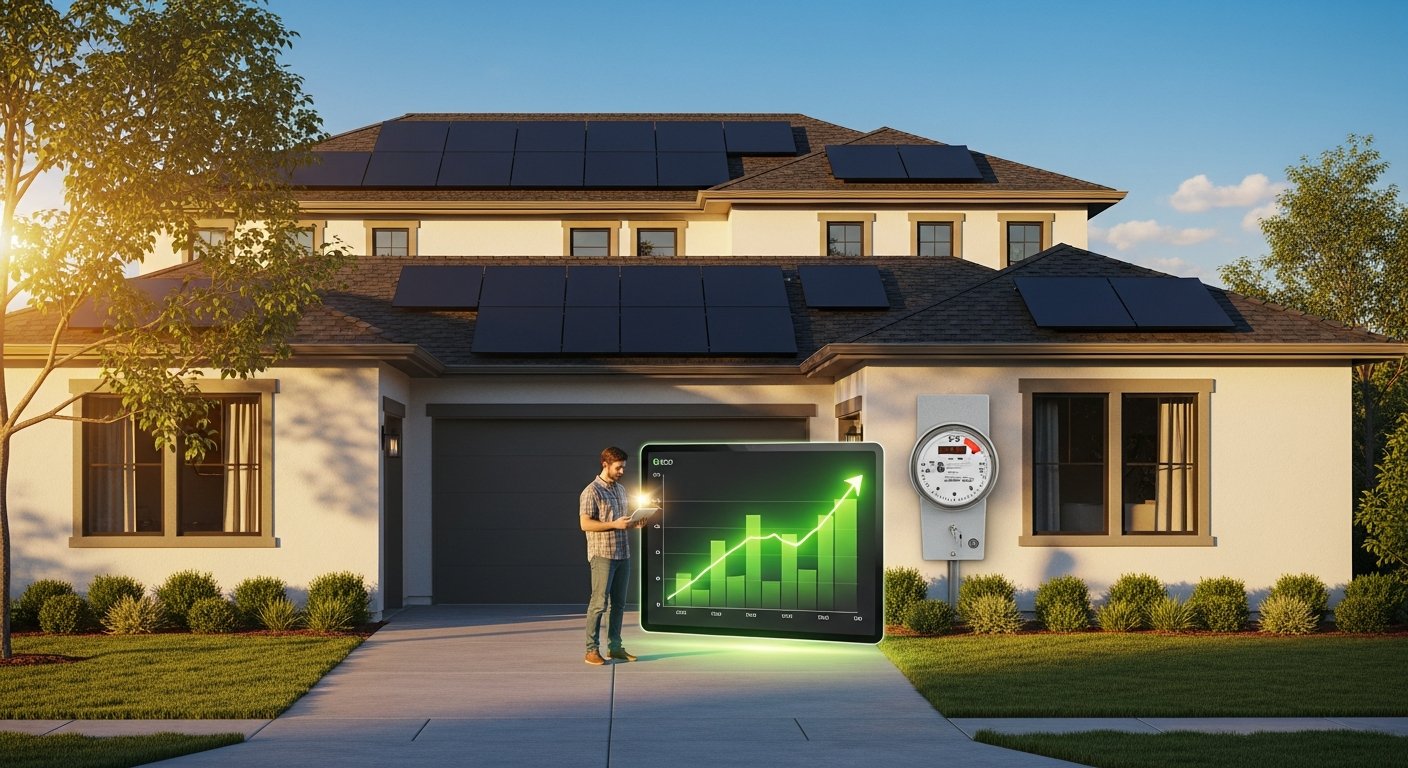
How to Maximize Your Solar Energy Savings in 2026
Discover the key factors that determine your solar energy savings and learn how to maximize your return with smart financing and installation choices.

By Brandon Moore
Learn more about Solar Panel Installation and Repair for guides, costs, and what to expect.
Compare Solar Panel Installation and Repair Pros Near You

Enter your ZIP code to compare top-rated local professionals and request free quotes.
When you look at your monthly electricity bill, you might wonder if there is a way to finally stop the cycle of rising rates and unpredictable charges. Solar panels have become a leading solution for homeowners across the United States, and the potential for solar energy savings is a major reason why. But the actual amount you save depends on several factors, including your location, your energy usage, and how you finance your system. This guide breaks down everything you need to know to maximize your financial return from solar, from understanding net metering to choosing the right installer.
What Drives Your Solar Energy Savings?
Solar energy savings are not automatic; they are the result of a system working in your favor. The core principle is simple: you generate your own electricity, so you buy less from your utility company. However, the size of your savings is influenced by your local electricity rates, the amount of sunlight your roof receives, and the efficiency of your panels. In states with high electricity costs like California or Massachusetts, the savings are often more dramatic because each kilowatt-hour you produce replaces a very expensive one.
Beyond the basics, your savings also depend on your consumption patterns. If you use most of your energy during the day when your panels are producing, you offset more of your usage directly. If you use more energy at night, you will rely on net metering or battery storage to capture the value of your daytime production. Understanding this dynamic is the first step to designing a system that truly fits your household.
Five Key Factors That Determine Your Payback Period
Before you sign any contract, you should evaluate these five critical elements. Each one directly impacts how quickly your investment pays for itself and how much total solar energy savings you will see over the life of your system.
- Electricity rates: The higher your current rate per kWh, the more you save per unit of solar power.
- Solar incentives: The federal tax credit and state-level rebates significantly lower your upfront cost.
- System size: A larger system produces more power but costs more; the goal is to match your usage, not overbuild.
- Sun exposure: Roof orientation, shading, and local climate all affect how much energy your panels actually generate.
- Financing terms: A cash purchase yields the highest return, but a low-interest loan can also deliver positive cash flow from day one.
Once you understand these factors, you can use online tools or consult with a professional to estimate your specific payback period. Most homeowners see a break-even point between 6 and 10 years, but this can be shorter in ideal conditions. After that, your electricity is essentially free, which is where the real solar energy savings accumulate.
Net Metering: The Silent Savings Multiplier
Net metering is a policy that credits you for the excess electricity your panels send to the grid. When your system produces more power than you use, the meter runs backward, and you earn credits that offset your consumption at night or on cloudy days. This arrangement can dramatically increase your solar energy savings because you are essentially using the grid as a free battery.
However, net metering policies vary by state and utility. Some utilities offer full retail credit, while others provide only a fraction of the retail rate. As of 2026, several states have revised their net metering rules, so it is crucial to check the current policy in your area. If you live in a state with less favorable net metering, adding a battery storage system can help you store your own energy and avoid selling it back at a low rate. This is why a tailored approach is essential; what works in one region may not work in another.
Financing Options That Protect Your Solar Energy Savings
The way you pay for your solar system can make or break your financial outcome. A cash purchase offers the highest long-term savings because you avoid interest charges and own the system outright. If you do not have cash on hand, a solar loan allows you to spread the cost over time while still reaping the benefits of ownership, including incentives and net metering. The key is to compare loan terms carefully, as interest rates and fees can vary widely.
Leases and power purchase agreements (PPAs) are popular alternatives because they require little to no upfront cost. With these options, a third party owns the system, and you pay a fixed rate for the power it generates. While these plans can deliver immediate bill reductions, they often result in lower total solar energy savings over time because you do not own the system or receive the tax credits. Before choosing a lease or PPA, read the fine print and understand the annual escalation clauses that could increase your payments over time.
To make the right choice, consider your long-term plans. If you intend to stay in your home for 10 years or more, ownership through cash or a loan usually maximizes your return. If you move frequently, a lease might be simpler to transfer. Always run the numbers with a trusted calculator or get personalized advice from a licensed solar consultant.
How to Compare Solar Quotes Without Losing Your Savings
One of the biggest mistakes homeowners make is choosing the first solar company they find. The price and quality of solar installations can vary by thousands of dollars, and the cheapest quote is not always the best. To protect your solar energy savings, you need to compare apples to apples. Look at the cost per watt, the efficiency and warranty of the panels, the inverter type, and the workmanship warranty offered by the installer.
A practical approach is to obtain at least three quotes from different providers. When you receive them, use a comparison checklist to evaluate each one. Pay attention to the projected annual output, the degradation rate of the panels, and the monitoring system included. A slightly more expensive system with higher efficiency and a longer warranty may actually deliver better savings over its lifetime. This is where a service that helps you compare offers can be invaluable, as it simplifies the process and ensures you are considering reputable companies.
If you are ready to start the process, you can compare solar energy quotes online to see what options are available in your area. This kind of side-by-side review can reveal significant differences in pricing and performance, helping you make a decision that maximizes your financial benefit.
Maximizing Savings with Batteries and Smart Usage
Adding a battery to your solar system can increase your energy independence and enhance your solar energy savings, especially if you live in an area with time-of-use (TOU) rates. With a battery, you can store excess solar energy during the day and use it during peak evening hours when electricity is most expensive. This strategy, known as load shifting, can significantly reduce your reliance on the grid and lower your overall costs.
Smart home technology can also play a role. By scheduling high-energy activities like laundry and dishwashing during peak solar production hours, you can directly offset more of your consumption. Even without a battery, these habits can improve your savings. Some utilities even offer rebates for battery installations, which can shorten your payback period further. As battery prices continue to fall, they are becoming an increasingly attractive addition to new solar installations.
Federal and State Incentives: Your Savings Boost
The federal Investment Tax Credit (ITC) remains one of the most powerful financial incentives for solar. As of 2026, homeowners can claim 30% of the total system cost as a credit on their federal income taxes. This credit directly reduces your tax liability, effectively lowering the net price of your system. Combined with state-level incentives, such as rebates, performance payments, or property tax exemptions, the upfront cost can be reduced by a substantial margin.
Because these incentives change frequently, it is essential to verify the current rules with official sources or consult a tax professional. For example, some states have caps on the number of systems eligible for rebates, so acting quickly can be beneficial. You can also check which incentives apply to you by using a free resource that outlines state-specific programs. This is one of the smartest ways to ensure you are capturing every dollar of available solar energy savings.
Long-Term Maintenance and Monitoring for Sustained Savings
Solar panels are remarkably durable and require minimal maintenance, but a little attention can help you maintain peak performance. Keeping your panels clean, especially in dusty areas, can improve efficiency by a few percent. Most installers recommend cleaning them a couple of times a year or after major storms. Additionally, monitoring your system's output through an online portal can alert you to any issues before they become costly problems.
Most quality panels come with a 25-year performance warranty, and inverters typically last 10 to 15 years. Budgeting for a future inverter replacement is wise, but the long-term operational costs are still very low. When you consider that your system will produce electricity for 25 years or more, the cumulative solar energy savings far outweigh the minor upkeep. This is why solar is often described as a smart, long-term investment.
Is Solar Worth It for Your Home?
The question of whether solar is worth it ultimately comes down to your specific circumstances. If you have a south-facing roof with good sun exposure, pay moderate to high electricity rates, and plan to stay in your home for several years, solar is almost certainly a wise financial move. Even in less ideal conditions, many homeowners still find that the combination of incentives and long-term savings makes solar a compelling choice.
To get a precise answer for your home, you need a personalized assessment. This includes a review of your energy usage, roof characteristics, and local utility policies. A free consultation can provide clarity without any obligation. In fact, you can schedule a free solar consultation to get expert advice tailored to your home. This step can help you avoid costly mistakes and ensure you achieve the maximum possible return on your investment.
Solar energy savings are not a myth, but they require careful planning. By understanding the factors that influence your savings, exploring your financing options, and comparing quotes thoroughly, you can make a confident decision that benefits your wallet and the environment. The journey to lower bills and energy independence starts with one step: getting informed. For a deeper dive into the financial side, you can also read our detailed breakdown on whether solar energy actually saves money. With the right approach, you can turn sunlight into a reliable source of savings for decades to come.