
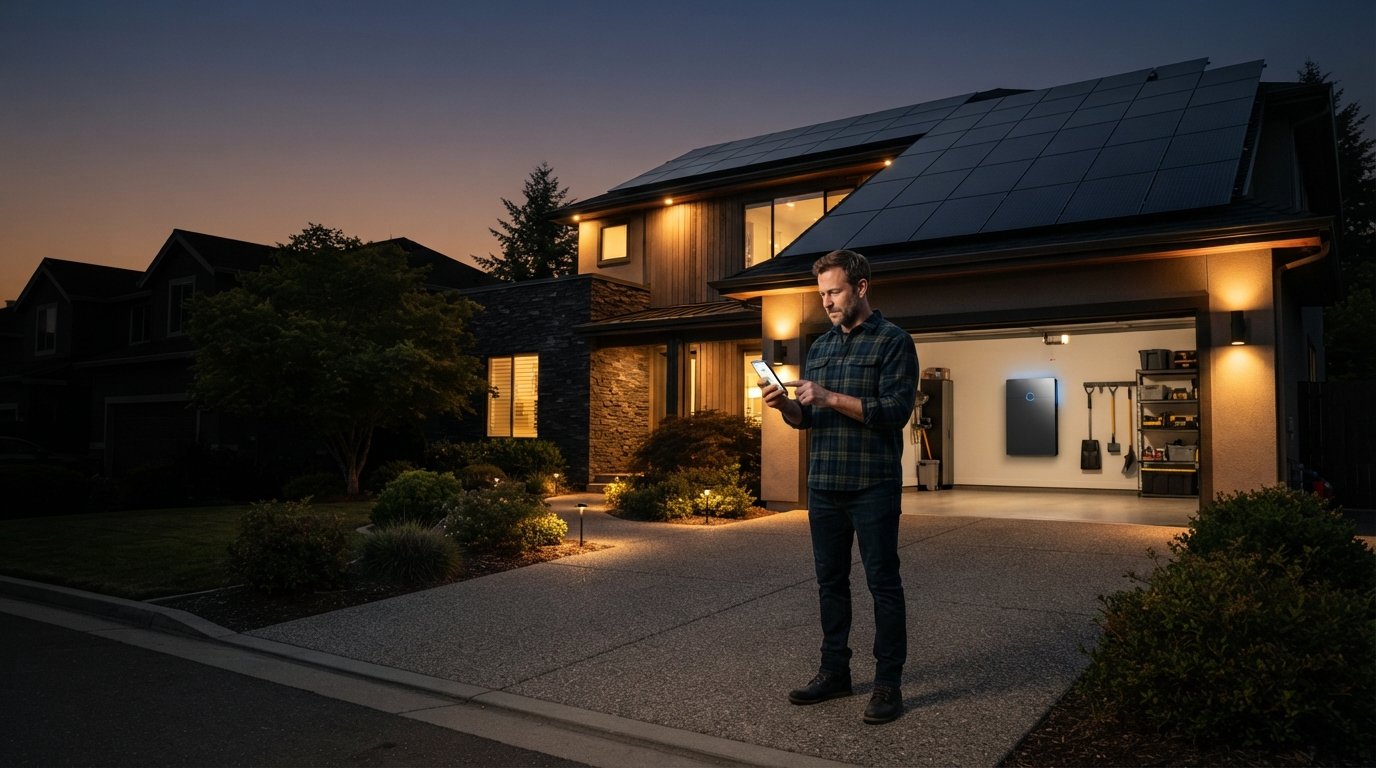
How to Achieve Energy Independence With Solar Power
Discover how solar panels and battery storage can cut your electric bills, protect against outages, and move your home toward true energy independence.

By Benjamin Taylor
Learn more about Solar Panel Installation and Repair for guides, costs, and what to expect.
Compare Solar Panel Installation and Repair Pros Near You

Enter your ZIP code to compare top-rated local professionals and request free quotes.
The idea of generating your own electricity is no longer a distant dream. As utility rates climb and extreme weather events become more common, many homeowners are looking for ways to take control of their power supply. Energy independence is not just about living off the grid; it is about gaining financial predictability, protecting your home from blackouts, and making a long-term investment in your property. For most people, solar panels paired with modern battery storage offer the most practical path forward.
This shift is driven by a simple realization: relying entirely on a centralized utility leaves you vulnerable to rate hikes and grid failures. By producing your own power, you create a buffer against these uncertainties. The journey toward self-sufficiency involves evaluating your energy usage, choosing the right equipment, and understanding the financial landscape. This guide will walk you through the critical steps to make your home more resilient and less dependent on external factors.
Defining True Energy Independence
True energy independence means your home can operate without drawing power from the local utility grid, at least for significant portions of the day. There are different levels of this independence. The most common approach is a grid-tied solar system with battery backup. This setup allows you to use solar power during the day, store excess energy in batteries for the evening, and still pull from the grid if your batteries run low. It offers a balance of cost savings and reliability.
A more extreme version is going fully off-grid, which requires a larger solar array and substantial battery capacity to cover several days of cloudy weather. While this offers complete autonomy, it often requires significant lifestyle adjustments and a higher upfront investment. For the vast majority of homeowners, the goal is not to sever ties with the utility completely, but rather to minimize reliance on it. This reduces your monthly bills and ensures you have power during outages, which is a practical form of independence that fits modern lifestyles.
The Financial Case for Solar and Storage
The economics of solar energy have improved dramatically over the past decade. The cost of photovoltaic panels has dropped, while efficiency has increased. This means the payback period for a typical residential installation is now shorter than ever. When you factor in the federal solar investment tax credit and various state incentives, the initial cost becomes much more manageable. Over the 25 to 30 year lifespan of your panels, the savings on electricity can be substantial, often totaling tens of thousands of dollars.
Battery storage adds to the upfront cost, but it enhances the financial and practical benefits. With a battery, you can participate in time-of-use billing more effectively. You can charge your battery when electricity is cheap (or free from the sun) and use it when utility rates peak. This strategy, known as load shifting, can significantly reduce your overall energy costs. Furthermore, in areas with net metering policies, you can sell excess power back to the grid, creating a credit on your bill. This combination of savings, incentives, and protection makes solar a compelling financial move.
Key Financial Benefits
Before you start getting quotes, it is helpful to understand the specific ways solar and batteries save you money. Here are the primary financial levers you will pull:
- Reduced Monthly Bills: Generating your own power directly offsets the kilowatt-hours you would otherwise buy from the utility.
- Protection Against Rate Inflation: Locking in a fixed cost per kilowatt-hour of solar power shields you from future utility price increases.
- Increased Home Value: Homes with solar panels often sell for a premium compared to similar homes without them.
- Grid Services: In some regions, you can earn credits for allowing the utility to draw from your battery during peak demand events.
These benefits work together to create a robust return on investment. The key is to size your system correctly to maximize these advantages. A system that is too small will not cover your needs, while one that is too large may have a longer payback period. This is where professional guidance and accurate data become essential.
Evaluating Your Home's Solar Potential
Not every roof is ideal for solar, but most can accommodate a system that provides meaningful savings. The first step is to assess your roof's orientation, tilt, and shading. South-facing roofs with a 30 to 40 degree pitch are optimal in the northern hemisphere. However, east and west-facing roofs can also work well, just with slightly reduced efficiency. Shading from trees or neighboring buildings can significantly impact production, so a site assessment is crucial.
Your household's energy consumption is the other half of the equation. Look at your annual electricity usage, not just the monthly bill, to understand your average daily kilowatt-hour consumption. This data will determine the size of the solar array you need. A reputable installer will perform a load analysis to ensure your system is designed to meet your specific needs, whether you want to offset 50% or 100% of your usage. This assessment is the foundation for an accurate quote and a successful installation.
Navigating Financing and Incentives
The upfront cost of a solar plus storage system can be significant, but there are several financing pathways to make it accessible. You can purchase the system outright with cash, which provides the fastest payback and highest long-term savings. Alternatively, you can take out a solar loan, which allows you to own the system with little to no money down. Loans have varying terms and interest rates, so it pays to shop around. A third option is a solar lease or power purchase agreement (PPA), where a third party owns the system, and you pay for the power it produces. This requires no upfront investment but offers lower long-term savings.
Federal and state incentives are the icing on the cake. The federal solar investment tax credit (ITC) allows you to deduct a percentage of your system cost from your federal taxes. Many states and local utilities offer additional rebates, performance-based incentives, or property tax exemptions. These incentives can reduce the net cost of your system by thousands of dollars. It is important to research the specific incentives available in your state, as they change frequently. Working with a knowledgeable installer who understands these programs can help you maximize your savings.
The Role of Battery Backup
Battery technology is the key differentiator between a solar system that saves money and one that provides true resilience. A solar battery allows you to store excess energy generated during the day for use at night, during peak rate hours, or during a grid outage. Without a battery, your grid-tied solar system will shut down during a blackout for safety reasons, leaving you in the dark even if the sun is shining. Adding a battery changes that dynamic, creating a home microgrid.
Choosing the right battery involves considering capacity (measured in kilowatt-hours), power output (measured in kilowatts), and chemistry (lithium-ion is the current standard). You will also need to decide if you want a system that can provide whole-home backup or just power critical loads like refrigeration, lights, and internet. While batteries add to the cost, they provide peace of mind and can be a lifesaver during extended outages. For many homeowners, the ability to keep the lights on and the fridge running is the primary motivation for pursuing solar in the first place. You can learn more about the financial nuances of this in our guide on solar battery backup explained.
Steps to Get Started
Taking the first step toward energy independence can feel overwhelming, but the process is straightforward when broken down. The goal is to gather information and compare options without feeling pressured. Here is a simple roadmap to follow:
- Gather Your Data: Collect 12 months of electricity bills to understand your average usage and peak demand.
- Research Installers: Look for certified, experienced solar companies with strong local reputations and solid warranties.
- Request Multiple Quotes: Get at least three detailed quotes that include equipment specifications, system size, and total cost.
- Compare Financing: Evaluate cash, loan, and lease options to determine which aligns with your financial goals.
- Check Incentives: Use resources like the Database of State Incentives for Renewables and Efficiency (DSIRE) to find available rebates and tax credits.
After you have completed these steps, you will have a clear picture of the costs and benefits. The next phase involves a site visit from the installer to finalize the design, followed by permits and the physical installation. The entire process from signing the contract to flipping the switch typically takes one to three months.
Choosing the Right System Size
Sizing your system correctly is perhaps the most critical technical decision. An undersized system will still leave you with high utility bills, while an oversized one may have a longer payback period than necessary. The goal is to design a system that produces enough energy to cover your annual consumption, or a specific target percentage. Installers use sophisticated software to model your roof's solar potential and estimate annual production based on local weather patterns.
For homes with electric vehicles or plans for electrification (like heat pumps or induction stoves), it is wise to size the system with future needs in mind. This future-proofing ensures your solar array can handle increased electricity demand as you transition away from fossil fuels. A well-designed system should not just meet your current needs; it should be a strategic asset that supports your lifestyle for decades. For those with larger properties, the considerations can be different, and you can find specific advice on solar panels for large homes.
Long-Term Maintenance and Monitoring
Solar panels are remarkably durable and require very little maintenance. Most systems are designed to withstand hail, wind, and heavy snow. The primary maintenance task is keeping the panels clean, which is often handled by rain. However, in dusty areas or during dry spells, occasional cleaning can improve performance. Most reputable installers offer monitoring software that allows you to track your system's production in real-time, alerting you to any drops in performance.
Batteries, on the other hand, have a finite lifespan, typically warrantied for 10 to 15 years. They will degrade over time, slowly losing their capacity to hold a charge. This is a normal process, and monitoring software will help you track battery health. Understanding the warranties on both your panels and your battery is crucial. A good warranty will cover parts, labor, and performance guarantees, ensuring your investment is protected. By staying proactive with monitoring and maintenance, you ensure your system continues to deliver savings and reliability for years to come.
Achieving energy independence is a journey that pays dividends in financial savings, home value, and peace of mind. It is a proactive step toward a more sustainable and resilient future. The best way to start is to get accurate, unbiased information tailored to your home. Whether you are just beginning your research or are ready to install, exploring your options is the key. To see what is possible for your property, you can start by reviewing off grid solar system quotes to understand the potential system configurations and costs.
As you move forward, remember that the most reliable path is one that is well-researched. The transition to solar is not just a home improvement project; it is a strategic financial decision. By understanding your energy usage, your roof's potential, and the available incentives, you can design a system that provides decades of clean, affordable power. The era of passive energy consumption is fading; the future belongs to homeowners who take an active role in their energy production. With the right plan, you can achieve a level of control over your energy that was once unimaginable.