
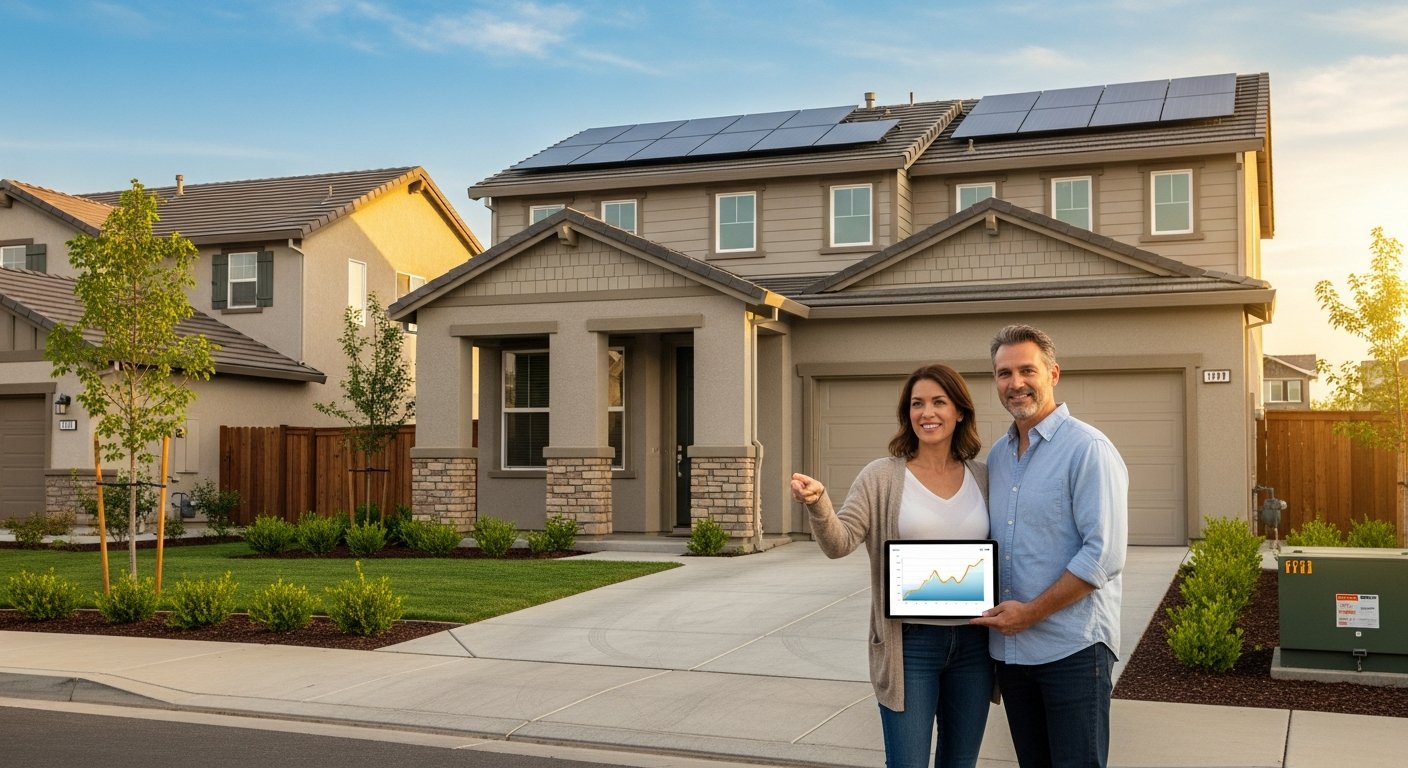
Are Solar Panels Worth It in 2026? A Homeowner's Guide
Are solar panels worth it? This guide breaks down costs, savings, payback periods, and incentives to help you decide if solar is right for your home.

By Caleb Morgan
Learn more about Solar Panel Installation and Repair for guides, costs, and what to expect.
Compare Solar Panel Installation and Repair Pros Near You

Enter your ZIP code to compare top-rated local professionals and request free quotes.
Every year, thousands of homeowners ask the same question: are solar panels worth it? The answer is rarely a simple yes or no, because your specific situation, from your local electricity rates to your roof's orientation, plays a huge role. However, with electricity costs continuing to climb and federal incentives still available, the financial and environmental case for solar has never been stronger for many U.S. households. This guide breaks down the real costs, savings, and long-term benefits so you can make an informed decision.
Before diving into the numbers, it's important to understand that solar is not just an environmental statement; it's a financial investment. Like any investment, it requires upfront capital (or financing), has a projected return, and carries some risk. The key is to evaluate solar panels as you would any other home improvement: by looking at the payback period, the increase in home value, and the long-term savings. By the end of this article, you'll have a clear framework to determine if solar is a smart move for your home.
How Solar Panels Save You Money
The primary way solar panels save you money is by generating your own electricity, which reduces the amount you need to buy from your utility company. This is known as net metering in most states. When your solar panels produce more electricity than you use, the excess is sent back to the grid, and you receive credits on your bill. During times when your panels don't produce enough (like at night), you draw from the grid and use those credits. This system can drastically reduce or even eliminate your monthly electricity bill, depending on the size of your system and your consumption.
Beyond the monthly savings, solar panels also protect you from rising electricity rates. Utility companies typically increase their rates by 2% to 4% per year. By locking in a significant portion of your electricity generation, you're effectively hedging against future price hikes. This predictability is a major advantage for budgeting, especially for families on a fixed income. Over the 25-year lifespan of a typical solar panel system, these savings can add up to tens of thousands of dollars.
The Financial Benefits at a Glance
To give you a clearer picture, here are the key financial benefits you can expect from a well-designed solar system:
- Reduced or eliminated electric bills: Most homeowners see a 50% to 90% reduction in their monthly electricity costs.
- Federal solar tax credit: You can claim 30% of your system's cost as a credit on your federal income taxes, with no upper limit through 2032.
- Increased home value: Studies show that homes with solar panels sell for a premium, often 4% to 6% more than comparable homes without solar.
- Protection against rate increases: You become less vulnerable to fluctuating energy prices.
These benefits are not automatic; they depend on your system's efficiency and your household's energy habits. However, for most homeowners, the math works out favorably. The key is to get a detailed quote and a professional assessment of your home's solar potential.
What Is the Payback Period for Solar Panels?
The payback period is the time it takes for your cumulative savings to equal your initial investment. On average, this ranges from 6 to 12 years, depending on where you live, your electricity rates, and the cost of your system. For example, a homeowner in a state with high electricity costs, like California or Hawaii, might see a payback period closer to 5 years. In contrast, someone in a state with lower rates, like Louisiana or Oklahoma, might have a payback period of 12 years or more.
To calculate your payback period, you take the net cost of your system (after tax credits and rebates) and divide it by your annual electricity savings. For instance, if your system costs $20,000 after incentives and saves you $2,000 per year, your payback period is 10 years. After that point, the electricity your panels generate is pure savings. Since most panels come with a 25-year performance warranty, you could enjoy 15 years or more of free electricity after you break even.
It's also worth noting that solar panels have a long lifespan, often exceeding 30 years with minimal degradation in performance. This means the financial benefits extend well beyond the payback period, making solar a lucrative long-term investment. To get an accurate payback estimate for your specific situation, it's best to consult with a solar professional who can analyze your energy usage and local conditions.
Factors That Affect Solar Panel Worth
The answer to whether solar panels are worth it hinges on several key factors. First, your location determines how much sunlight your panels will receive. States like Arizona, Nevada, and Texas have excellent solar resources, while the Pacific Northwest gets less sun. However, even in less sunny areas, solar can still be worthwhile if electricity rates are high. Second, your roof's condition, angle, and shading are critical. A south-facing roof with minimal shade is ideal, but east and west-facing roofs can also work well with modern panel technology.
Third, your electricity consumption plays a major role. If you have a large household with high energy usage, solar panels will save you more money than if you use little electricity. Fourth, the cost of electricity in your area is a crucial factor. The higher the rate you pay per kilowatt-hour, the more valuable solar becomes. Finally, you need to consider the available incentives. The federal tax credit is currently 30%, but some states and utilities offer additional rebates, performance-based incentives, or solar renewable energy certificates (SRECs) that can significantly reduce your upfront costs.
To get a precise assessment, you can use online solar calculators or get a free quote from a reputable installer. These tools can provide a customized estimate of your system's cost, savings, and payback period. When comparing quotes, be sure to look at the cost per watt, the quality of the equipment, and the warranty terms.
Comparing Solar Financing Options
How you finance your solar system also impacts its worth. Here are the three primary options:
- Cash purchase: You pay the full system cost upfront. This gives you the highest long-term savings because you avoid interest payments and you own the system outright, making you eligible for all incentives.
- Solar loan: You finance the system with a loan, often with low monthly payments. You still own the system and claim the tax credit, but you pay interest, which reduces your net savings.
- Solar lease or power purchase agreement (PPA): You don't own the system; a third party installs and maintains it, and you pay for the electricity it generates at a set rate. This requires little to no upfront cost, but your savings are lower because you don't own the system or claim the tax credit.
For most homeowners, a cash purchase or a solar loan offers the best financial return. However, if you can't afford the upfront cost and want to lower your bills without a large investment, a lease or PPA can still provide savings. The right choice depends on your financial situation and long-term goals. It's important to read the fine print and understand the terms, especially with leases, which can be complicated if you decide to sell your home.
Increase in Home Value and Resale Appeal
One of the most compelling arguments for solar panels is the increase in home value. According to a study by Zillow, homes with solar panels sell for 4.1% more on average than comparable homes without them. This premium can translate to an additional $10,000 to $30,000 in sale price, depending on the home's value and the size of the solar system. The reason is simple: buyers are attracted to the prospect of lower utility bills and the environmental benefits of renewable energy.
However, the resale value is only realized if you sell your home. If you plan to stay in your home for many years, the savings on your electricity bills will likely outweigh the resale premium. Additionally, the way you finance your system affects resale. A system that is owned outright adds value, while a leased system can be a complication, as the buyer may need to take over the lease or you may need to buy out the system before selling. For this reason, owning your solar panels is generally better for resale value.
In our guide on Forest River solar panels, we explore how even niche solar applications can add value. When you're ready to sell, a solar installation that is well-documented and transferable can be a strong selling point.
Environmental Impact and Energy Independence
Beyond the financial benefits, solar panels offer significant environmental advantages. By generating clean, renewable energy, you reduce your carbon footprint and decrease reliance on fossil fuels. A typical residential solar system can offset about 3 to 4 tons of carbon dioxide per year, which is equivalent to planting over 100 trees annually. For many homeowners, this environmental impact is just as important as the financial savings.
Solar also provides a degree of energy independence. With a solar system, you are less vulnerable to power outages and grid failures, especially if you pair it with a battery storage system. While the initial investment for batteries can be high, they offer the ability to store excess energy for use during peak hours or emergencies. This resilience is increasingly valuable as extreme weather events become more common. If you're interested in a do-it-yourself approach, you can read more about how to install your own solar panels to cut costs, though professional installation is recommended for most.
Moreover, solar panels require minimal maintenance. Most systems only need occasional cleaning and periodic inspections, and the panels themselves have no moving parts. The inverter, which converts DC to AC power, may need replacement after 10 to 15 years, but this is a minor cost compared to the overall savings. With a good warranty, your system is designed to last for 25 years or more, providing decades of clean energy.
Common Myths and Misconceptions About Solar
Despite the growing popularity of solar, several myths persist. One common misconception is that solar panels don't work in cloudy or cold climates. In reality, panels still generate electricity on overcast days, and they actually perform better in cooler temperatures than in extreme heat. Germany, a country with limited sunshine, is a world leader in solar adoption. Another myth is that solar panels are ugly and decrease curb appeal. Modern panels are sleek and low-profile, and many homeowners find them aesthetically pleasing.
Another myth is that solar is too expensive for the average homeowner. While the upfront cost can be significant, financing options and the 30% federal tax credit make it more accessible than ever. Additionally, many states offer property tax exemptions for solar, meaning your home's increased value won't result in higher property taxes. It's also a myth that solar panels require constant maintenance. In fact, they are quite durable and need very little attention. A periodic rinse with a hose is usually sufficient, and rain does most of the cleaning naturally.
Finally, some worry that solar panels will damage their roof. Professional installers use proper mounting techniques that actually protect the roof, and in some cases, the panels can even extend the life of the roof by shielding it from the elements. If you're concerned about the efficiency of different panel types, you can compare the most efficient solar panels to find the best fit for your home.
How to Get the Most Accurate Solar Quote
To truly determine if solar panels are worth it for you, you need a professional assessment. A reputable solar installer will visit your home, evaluate your roof's condition, measure its angle and shading, and review your past electricity bills to size the system correctly. They will then provide a detailed quote that includes the cost of equipment, installation, permits, and any applicable fees. Be sure to get at least three quotes from different companies to compare pricing and system designs.
When reviewing quotes, pay attention to the cost per watt, which is the total system cost divided by the system size in watts. The national average is around $2.50 to $3.50 per watt, but this can vary. Also, check the equipment quality: panels and inverters from top-tier manufacturers come with better warranties and performance guarantees. Finally, ask about the installer's workmanship warranty, which covers the installation itself.
Once you have your quotes, you can use them to calculate your payback period and total 25-year savings. Many installers provide these calculations for you, but you can verify them using online solar calculators. Remember that your actual savings will depend on your future electricity usage and rate changes, so it's wise to be a little conservative in your estimates.
After evaluating all these factors, the question of whether solar panels are worth it becomes clearer. For most homeowners in the United States, especially those with high electricity costs and good solar exposure, the answer is a resounding yes. Solar not only reduces or eliminates your monthly bills, but it also increases your home's value, protects you from rate hikes, and contributes to a cleaner environment. The key is to do your research, get multiple quotes, and choose a financing option that works for your budget.
If you're ready to take the next step, consider getting a free, no-obligation quote from a trusted provider. They can help you navigate the incentives and design a system that meets your specific needs. With the right approach, going solar can be one of the best financial and environmental decisions you ever make.